My Little Princess : Stores
- 4.2
- Rating
- 10.00K
- Installs
- $4.49
- Price

 Analysis by App-foxy
I approached My Little Princess as a calm, open-ended castle game rather than a traditional challenge-based title. There are no scores to chase in the way you would expect from a puzzle game, and the appeal comes from exploring rooms, touching objects, and creating small stories around the characters. Developed by My Town Games Ltd, it sits in the educational game category, although its learning value is informal: children practice observation, choice-making, language, and imaginative play while moving through a royal setting.
That distinction matters before you buy it. This is not a lesson app with exercises, progress reports, or a clear curriculum. It is closer to a digital dollhouse with a castle theme. In my experience, that makes it especially pleasant for children who enjoy pretend play but less satisfying for anyone expecting levels, missions, or a strong sense of completion. The store summary focuses on interacting with almost everything in the castle, and that is a fair description of the central experience, but the real question is whether your child enjoys inventing what happens next.
How the castle works in everyday play
The basic workflow is wonderfully simple. I open the game, enter a room, look around, and start dragging characters or objects into different places. A child can decide that a meal is being prepared, a royal visitor has arrived, or bedtime has begun without first learning a complicated control scheme. The castle provides the setting, while the player supplies the plot.
You May Also Like

 Blood Strike: 2.5 Anniversary
Blood Strike’s Loadouts Turn Every Drop Into a Tactical Gamble
A close look at Blood Strike’s custom loadouts: how fast access to signature weapons reshapes its battle royale rhythm, rewards preparation, and narrows the gap between fights.

 Pandora - Music & Podcasts
Pandora’s Music Is Easy to Start, but Harder to Recover
Pandora’s strength is its low-effort path from a seed to a station. Its weak spot is how much confidence it asks you to place in connection, setup, and quiet recovery.

 8 Ball Pool
 Is Built on Rivalries, Rematches, and Routine
A close look at the rivalries, rematches, shared routines, and unanswered safety questions that turn a quick pool match into a persistent mobile community.

 Samsung Music
’s Quiet Strength Is Playing What You Already Own
Its reach comes less from spectacle than from dependable access to a personal library. That simplicity is both the app’s strongest retention engine and its ceiling.

 AccuWeather: Weather Radar
AccuWeather Review: A Quick, Clear Forecast for Everyday Decisions
For everyday plans, the best forecast is the one you can understand quickly. AccuWeather makes rain timing, radar, and local conditions easy to act on, with a few trade-offs.

 Hill Climb Racing
Why Hill Climb Racing Still Turns Crashes Into One More Run
A tiny car, a bumpy hill and one more upgrade: Hill Climb Racing keeps resurfacing because its simple chaos makes every near-miss feel personal.
More From Our News Desk
View All News


That simplicity is one of the strongest reasons to consider it for younger children. A child who is still learning where objects belong can experiment without being punished for mistakes. Moving something to the wrong room is not a failure; it can become part of the story. I found that this encourages a different kind of attention from fast arcade games. Instead of reacting quickly, the player notices details, remembers where things are, and decides how they fit into an imagined scene.
A realistic use case is a short quiet-time session after school. A parent can sit nearby, ask the child who lives in the castle, and let the child arrange a little sequence of events. The game gives enough material to start a conversation, but it does not force the adult to take over. For a child who likes narrating stories, that can be more engaging than a worksheet. For a child who wants constant rewards and obvious goals, the same freedom may feel empty after a few minutes.
I also like that the game can be used socially without requiring a competitive structure. One child can choose characters while another decides where they should go, or an adult can prompt the player with questions such as “What happens next?” This makes it useful for shared play, particularly when the goal is vocabulary practice or storytelling rather than winning. The educational benefit comes from how the child uses the castle, not from a lesson screen telling them what to learn.
The controls are easy enough for a young player to understand, but supervision still helps at the beginning. Children may tap quickly, move items accidentally, or leave a scene before finishing their idea. I recommend showing them a repeatable routine: choose one room, select the characters for that scene, arrange the objects, and then tell the story from beginning to end. That habit turns free play into a more focused activity without taking away its creative side.
What I would check before handing it over
Because this is a paid game, I would first make sure the device is compatible. It requires Android 8.0 or later, and the current version is 7.03.02. I would also open it once myself before inviting a child to play, not because the controls are difficult, but because a quick adult tour makes it easier to explain the castle and identify which areas are most likely to hold a child’s attention.
The age rating is Everyone, which fits the gentle presentation and family-oriented play style. Still, an age label cannot tell you whether the design matches your particular child. A preschooler may need help with dragging and understanding the layout, while an older child may enjoy it only if they already like role-play. I would treat the rating as a content guide, not as a promise that every child will find the experience absorbing.
The purchase also deserves a practical look. The listed price is $4.49, and in-app purchases are shown at $0.99 per item. That means I would explain the purchase situation to a child before play and keep store access under adult control. The upfront cost is easier to understand than a free download filled with interruptions, but families should still be comfortable with the possibility of additional items being offered.
Its audience size is modest, with over 10 thousand installs and an average rating of 4.2 from around 246 ratings. I would not use those figures as a substitute for personal fit. They suggest that the game has found an audience, but the more useful signal is whether your child prefers open-ended castle play to structured educational apps. The game’s 28 written reviews can offer extra context when choosing, although no rating can reveal how your child will respond to a blank-slate experience.
Settings and routines worth checking
There is no reason to begin by changing everything. My preferred approach is to leave the game’s basic presentation intact, watch how the child interacts with it, and then adjust the routine around the child’s needs. If the player becomes distracted by moving from room to room, I set a small story goal before starting. If they seem unsure what to do, I demonstrate one action and then hand control back rather than completing the whole scene for them.
The most useful “setting” is often the play environment around the app. A quiet surface, a short session, and one clear prompt make the castle easier to understand. For example, asking a child to prepare a celebration in one room gives them a reason to inspect objects and move characters with purpose. Later, the same scene can be retold with a different ending. This creates repeatable play without pretending that the game has a formal mission system.
I would also decide in advance whether the child is playing independently or with an adult. Independent play works best when the child already understands the drag-and-drop rhythm. Shared play is better when the child needs help turning scattered actions into a story. Mixing the two approaches can be useful: begin together, let the child continue alone, and return at the end to hear what happened.
Another worthwhile habit is to use the game as a speaking prompt rather than a silent toy. Ask the child to name characters, describe locations, or explain why an object was moved. This is particularly helpful for children who enjoy visual play but need encouragement to build longer sentences. The castle does not need to provide spoken instructions for it to support language; the adult or another child can supply that layer naturally.
Families should also decide how to handle additional content before the first session. Since individual items are priced at $0.99, I would avoid making spontaneous purchases in front of a child unless the family has already agreed on a rule. The best workflow is to explore the included experience first, see whether the child returns to it, and only then consider whether an extra item would genuinely add variety. Buying simply because a child asks in the moment can make the experience feel less intentional.
Faster patterns for parents and children
Experienced use of this game is less about secret shortcuts and more about reducing aimless wandering. I use a three-stage pattern: choose a theme, build a scene, and replay it with one change. A “royal visit” might begin with selecting the guests, arranging the room, and then changing the visitor’s purpose in the second round. The child learns that the same objects can support different stories, which is a more valuable discovery than merely filling every room once.
A second pattern is to give each player a role. One person can be the director who decides what should happen, while another moves the characters and objects. Then they switch. This prevents a confident player from doing everything and gives a quieter child a reason to make decisions. It also reveals whether the game works for siblings: it can, but only when the adults establish turn-taking because the open format does not automatically create fair turns.
I find it helpful to finish with a verbal recap. After the scene is complete, ask the child to describe the beginning, middle, and ending. This turns a few minutes of object movement into a small narrative exercise. If the child is very young, simple prompts work better than correction: “Who arrived?” “Where did they go?” and “What happened after dinner?” The goal is to extend the play, not to grade the answer.
For repeat sessions, I would avoid trying to use the entire castle every time. A smaller area creates clearer stories and helps the child remember the environment. Once they know a room well, introduce another location and connect the two. That gradual expansion is more effective than encouraging constant exploration, especially for children who become overwhelmed when there are too many choices.
One trade-off is that the same freedom that supports creativity can reduce replay value for children who need novelty supplied by the game. If your child keeps asking what to do next, do not assume they are missing a button or a hidden objective. They may simply prefer guided tasks. In that case, an educational app with explicit activities, a puzzle game with levels, or a more structured storybook may be a better everyday choice.
Where the open format reaches its limits
The biggest limitation is the lack of a strong external goal. My Little Princess can occupy a child who enjoys inventing scenarios, but it cannot guarantee sustained engagement. There is no reason to finish one story and no clear progress path that tells the player what they have mastered. That makes it relaxing, but it also means the adult may need to provide the structure.
I would not choose it as the main educational tool for reading, mathematics, spelling, or measurable skill practice. Its educational character is play-based and conversational. If you need clear exercises, feedback, or a sequence that becomes more difficult over time, another app will serve that purpose better. This game works alongside those tools, not as a replacement for them.
The paid model is another point to weigh. A $4.49 purchase can be reasonable for a child who returns to open-ended play, especially when compared with apps that rely heavily on advertising or constant prompts. But the value depends on temperament. A child who explores once and moves on may get less from it than a child who repeatedly creates new scenes. The additional $0.99 items also mean the final cost can grow if the family wants more variety.
There is also a control challenge that is easy to underestimate. Young players can move objects without meaning to, and a scene can quickly become messy. That is not a technical defect so much as a consequence of giving the player broad freedom. I solve it by treating rearrangement as part of the activity and by encouraging the child to restore a room when the story ends. If that kind of loose organization causes frustration, a more linear game may feel better.
Compared with conventional educational games, this one offers fewer direct instructions but more room for imagination. Compared with digital dollhouse apps, its castle theme gives play a recognizable setting and a natural reason for characters to meet, eat, rest, or celebrate. Compared with a physical dollhouse, it is easier to reset and rearrange, although it does not provide the same hands-on experience or real-world object handling. The right choice depends on whether you value convenience and quick scene changes over tactile play.
My final view on who should download it
After using it as a reviewer would, I see My Little Princess as a focused choice for children who enjoy pretend play, visual exploration, and making up conversations. I would recommend it to a family looking for a gentle castle setting that can support independent play for short periods and shared storytelling when an adult joins in. The strongest results come when the game is treated as a creative starting point rather than a self-contained lesson.
I would skip it if your priority is a clear curriculum, frequent rewards, competitive action, or a defined sequence of levels. I would also hesitate for a child who becomes frustrated when a game does not explain the next objective. In those cases, a structured puzzle or skill-building app will probably feel more satisfying. The same applies to families who do not want to manage optional purchases, even though the initial price is straightforward.
For everyone else, the best way to judge it is to use a repeatable routine: begin with one room, choose a simple scenario, let the child arrange the scene, and ask them to explain what happened. That approach exposes the game’s real strength quickly. It is not trying to teach through drills or entertain through speed. It gives children a castle full of possibilities and asks them to decide what those possibilities mean.
My recommendation is therefore positive but specific. At $4.49, it makes sense when your child already likes imaginative role-play and you are willing to add a little structure from outside the screen. The Everyone rating, the accessible controls, and the current 7.03.02 version make it an approachable family option, while the open-ended design keeps it from being a universal recommendation. Its value is highest when the child becomes the storyteller, not merely the person tapping objects.
FAQs for My Little Princess : Stores
01What is My Little Princess: Stores?
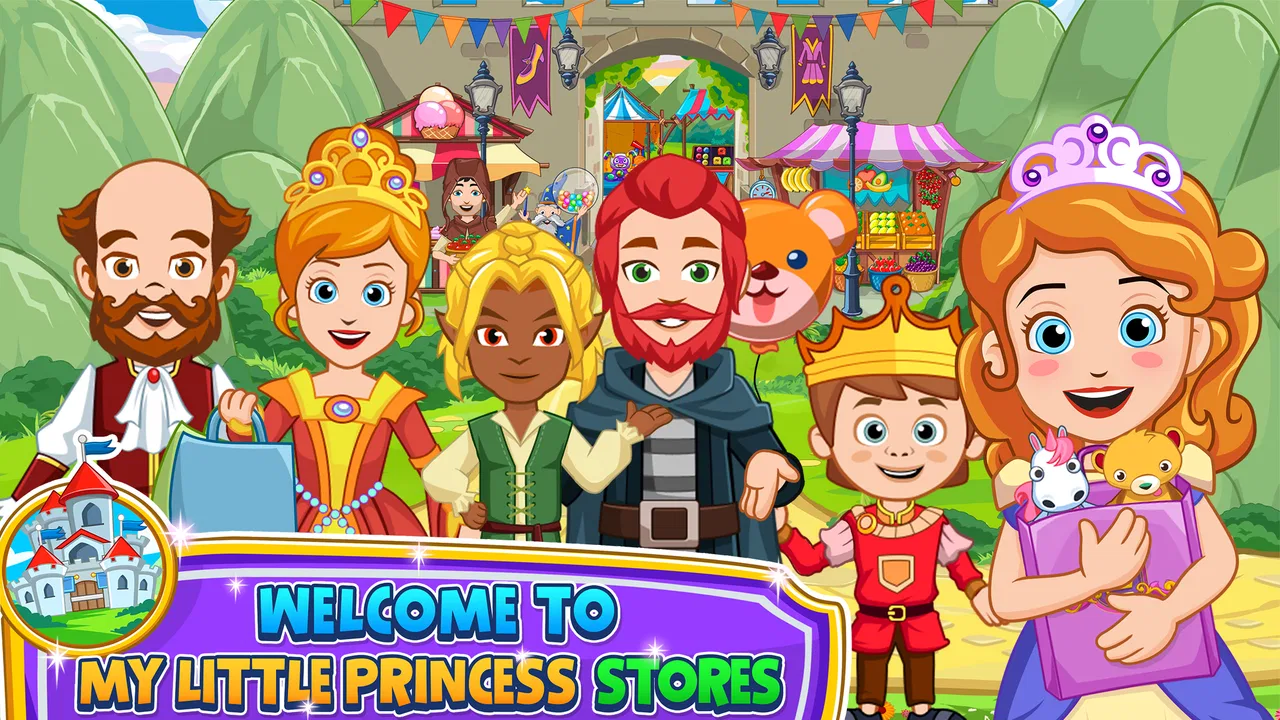
My Little Princess: Stores is a child-friendly imaginative play game where players explore different shops and create their own stories. Instead of following a strict mission structure, children can move characters around, interact with objects, try on items, and invent everyday adventures. The colorful locations and simple touch controls make it approachable for younger players, while the open-ended design encourages creativity and role-playing.
02Is My Little Princess: Stores suitable for young children?
The game is designed with children in mind, offering bright visuals, straightforward controls, and non-violent pretend play. There are no complex objectives or difficult controls to master, so younger players can explore at their own pace. Parents should still review the available content, device settings, and store information before downloading, especially if the child will play independently or use a shared family device.
03Can children play My Little Princess: Stores offline?
Much of the core experience is generally based on exploring the stores and interacting with the characters and objects, so it may be playable without a continuous internet connection after installation. However, an internet connection can still be required for downloading the game, checking updates, restoring purchases, or accessing certain optional content. Testing offline access on your specific device is recommended before relying on it during travel.
04Does My Little Princess: Stores include in-app purchases or advertisements?
The availability of advertisements, paid content, and purchasing options can depend on the platform, edition, and current version of the game. Some areas or additional features may require payment, while store listings can change over time. Parents should check the Android or iOS product page carefully and enable parental controls or purchase authentication to prevent accidental transactions when children are playing.
05What devices are compatible with My Little Princess: Stores?
Compatibility depends on whether you are downloading the Android or iOS version, as well as the operating system version and available storage on your device. Before installing, check the official store listing for the latest requirements. A newer phone or tablet will usually provide smoother animations and faster loading, while older devices may experience reduced performance or may no longer be supported.
Pros
- Colorful
- child-friendly visuals make each store easy and fun to explore.
- Open-ended play encourages creativity without timers
- scores
- or losing conditions.
- Simple touch controls are suitable for young children to use independently.
- Characters and objects can be moved freely between different store locations.
- Offline play is convenient for travel and areas without an internet connection.
Cons
- Some locations and items require additional purchases to unlock.
- The free content may feel limited after a short period of exploration.
- Young children may accidentally access in-app purchase screens.
- Replay value depends heavily on imaginative play rather than structured activities.
- Performance can vary on older devices with slower loading or occasional lag.

My Little Princess : Stores
Gallery